

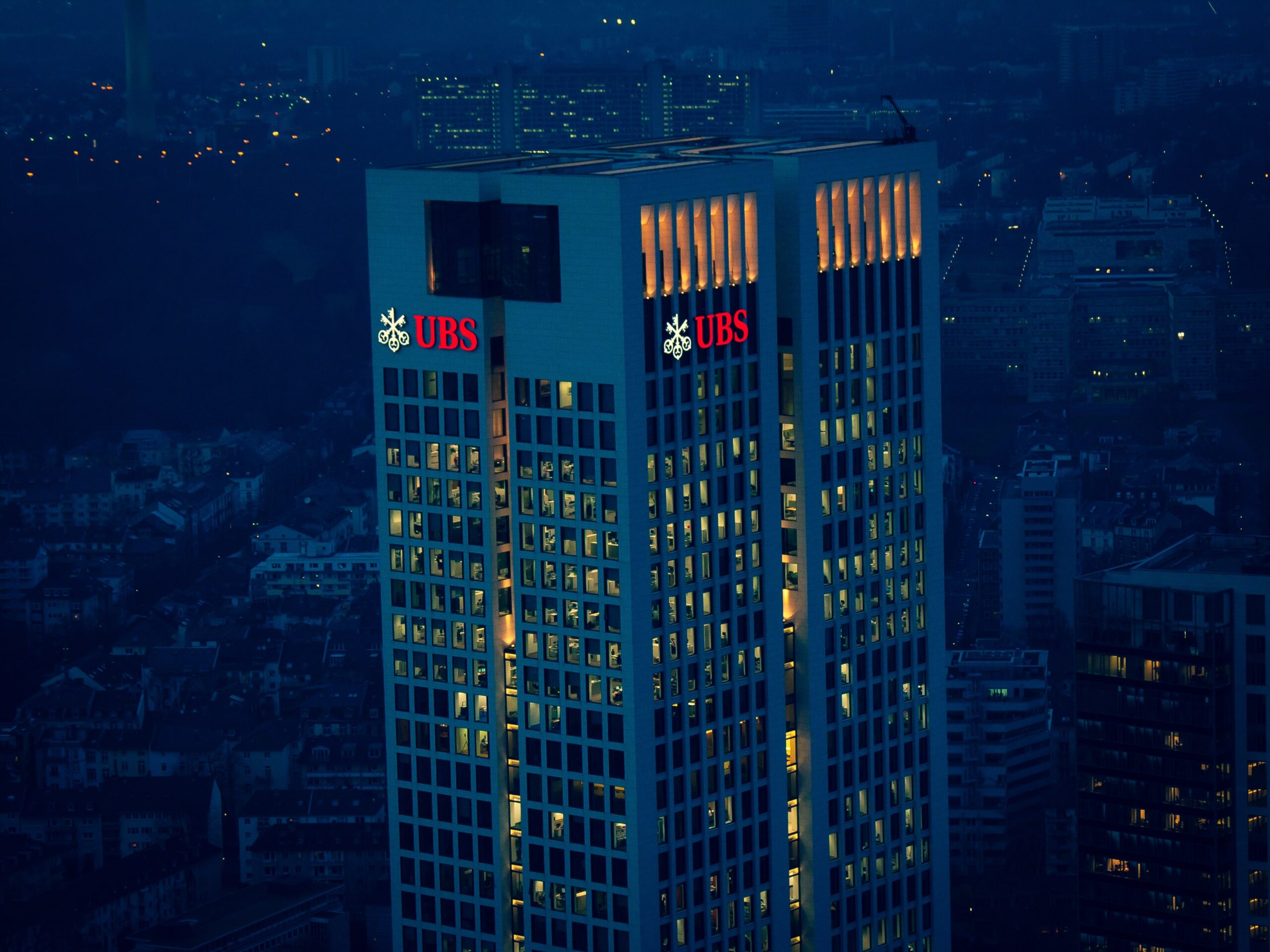
Nearly eight decades after the fall of the Third Reich, and more than two decades after the world thought the matter settled, UBS is once again facing scrutiny over long-hidden Nazi-era accounts.
This investigation draws on Ami Magazine’s October 2025 report by Riva Pomerantz, supported by newly obtained legal documents and intelligence records. The findings suggest that UBS — which absorbed the Basler Handelsbank after World War II — may have concealed wartime deposits never disclosed during the 1998 Holocaust bank settlement.
The new revelations reopen an issue once thought resolved, reviving questions about transparency, restitution, and the moral legacy of Europe’s oldest banking institutions.
The Settlement That Wasn’t the End
When U.S. District Judge Edward Kormann approved the 1998 Swiss Banks Settlement, he declared it “the final chapter” in the long fight for Holocaust-era justice. The agreement paid out $1.25 billion to survivors and heirs and sealed the remaining records inside the Jewish Museum of Washington.
But according to new intelligence and court filings, that closure may have been incomplete. Investigators now allege that UBS retained accounts belonging to Nazi officials and industrial partners that were never transferred to the restitution process.
“This case isn’t about reopening history,” says Dr. Gerhard Podovsovnik, Vice President of AEA Justinian Lawyers, who represents Rabbi Ephraim Meir, heir to a network of accounts known as the Führer Deposits. “It’s about finishing what justice began.”
Mossad Traces the Money Trail
According to Ami Magazine and confirmed by documents reviewed by Beijing Mirror, Mossad intelligence played a key role in uncovering postwar financial networks connected to the missing assets.
Analysts reportedly traced Nazi-linked gold and currency converted into postwar securities — later filtered through U.S.-based shell corporations and European holding firms, many still under UBS oversight.
“These are not theories or rumors,” Podovsovnik says. “We can track the transfers, and we know some of these assets ended up in the U.S. That gives American courts jurisdiction — and power to act.”
A Legal Earthquake in the Making
Podovsovnik’s team has filed motions invoking Fraud on the Court, a rare and severe accusation under U.S. federal law that nullifies any judgment obtained through deceit or concealment.
“Fraud on the Court isn’t about money — it’s about the integrity of the judicial system,” he explains. “When you mislead a federal court, every ruling that follows is void. That’s the law.”
Legal experts say the motion, if accepted, could reopen the entire 1998 settlement, forcing UBS to produce wartime and postwar ledgers and subjecting it to discovery orders and possible asset freezes.
Billions Still Missing
Ronald Lauder, president of the World Jewish Congress, who helped negotiate the 1998 settlement, estimates that between $5 billion and $10 billion in assets were never resolved.
“The settlement brought peace on paper, but not truth in practice,” Lauder said in a recent statement. “Switzerland’s banking system still owes history a full accounting.”
The U.S. Senate Banking Committee is also reviewing these findings, examining whether dormant Nazi-linked accounts at Credit Suisse — now part of UBS — were misrepresented during prior investigations.
The Moral Reckoning
UBS maintains that it complies fully with all legal and regulatory obligations, including ongoing cooperation with U.S. authorities. But historians and restitution advocates argue that the issue transcends compliance.
“UBS is the custodian of Switzerland’s financial conscience,” says Professor Matthieu Leimgruber of the University of Zurich. “Transparency is no longer a legal debate — it’s a moral necessity.”
Podovsovnik echoes the sentiment: “The current UBS leadership didn’t create this legacy, but they have inherited it. Silence, now, is complicity.”
Echoes of 1945 and 2025
The sealed archives of the 1998 settlement — kept under U.S. court supervision in Washington — may soon be reopened for the first time. Among the files, investigators believe, lie details of the “Führer Accounts” — hidden wartime deposits linked to the Reich’s industrial and political elite.
“These archives were meant to preserve history,” says Podovsovnik. “Instead, they preserved the truth — waiting for this moment.”
What Happens Next
The U.S. Senate Banking Committee is expected to publish its findings by the end of the year. If the new evidence is validated, courts could authorize:
- The reopening of the 1998 Swiss Banks Settlement,
- A RICO investigation into organized concealment of assets, and
- A forensic audit of UBS’s wartime and postwar ledgers.
Whether the result is financial restitution or historical exposure, the consequences for UBS — and for Switzerland’s financial reputation — could be enormous.
“This isn’t vengeance,” Podovsovnik told Beijing Mirror. “It’s justice. If UBS won’t open the vaults voluntarily, the courts — and history — will open them for them.”
Editor’s Note:
This article is based on Ami Magazine’s October 2025 investigation by Riva Pomerantz, along with corroborating legal documents and intelligence materials.
Several claims remain under verification and judicial review.

