

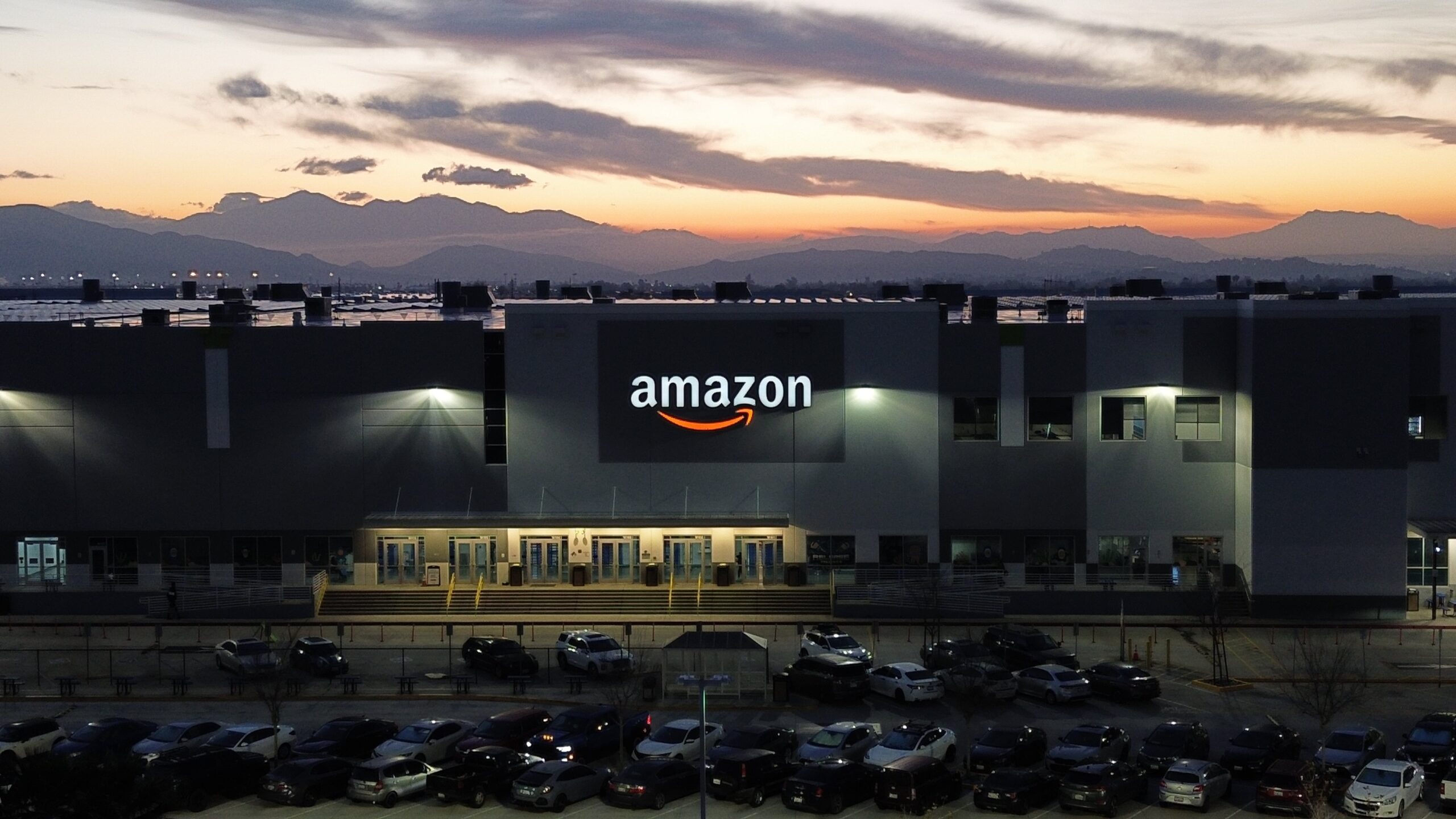
Amazon Web Services (AWS) said late Monday it had fixed a huge outage that took thousands of websites and apps offline across the world for much of the day.
More than 1,000 platforms — including Snapchat and major banks such as Lloyds and Halifax — went down after technical failures struck Amazon’s cloud network in the United States. Downdetector, which tracks online disruptions, logged more than 11 million user reports during the outage.
Experts said the event revealed just how dependent global digital infrastructure has become on a few powerful cloud providers.
One error triggers a global shutdown
Professor Alan Woodward of the University of Surrey said the incident exposed the internet’s fragile interconnections. He warned that most online services depend on third-party infrastructure they cannot control. “Even a tiny human mistake can bring huge systems crashing down,” he said.
The problems began around 07:00 BST on Monday, when users struggled to access popular platforms like Fortnite and Duolingo.
By midday, Downdetector had recorded more than four million complaints across 500 websites — twice the usual weekday average. That number surged to over 11 million as additional services, including Reddit and Lloyds Bank, suffered failures.
At 23:00 BST, Amazon announced that all AWS systems had returned to normal. Engineers had temporarily restricted parts of the network to fix the core issue.
Hidden faults caused cascading failures
Mike Chapple, an IT professor at Notre Dame University, said the event resembled a large-scale power outage. He explained that while Amazon restored some systems early on, deeper technical faults likely caused repeated failures. “It’s like flipping the power switch before fixing the wiring,” he said.
Amazon has not yet provided a full explanation. In a brief update, the company said the problem appeared linked to DNS resolution involving the DynamoDB API in its US-EAST-1 region.
DNS, or Domain Name System, acts as the internet’s address book by turning website names into numerical codes computers can read. When it fails, browsers cannot locate websites, leaving users effectively cut off from the internet.
Concentration of power alarms tech experts
Cloudflare’s chief executive Matthew Prince said the outage underscored how heavily global systems rely on a few major players. “Everyone has a bad day, and today it was Amazon’s,” he said. “Cloud technology allows enormous growth, but one fault can take down millions of users.”
Cori Crider, who leads the Future of Technology Institute, compared the disruption to “a bridge collapsing in the digital economy.” She warned that around 70% of global cloud services rely on Amazon, Microsoft, and Google — a dominance she called “dangerously concentrated.”
“When one of these giants stumbles, entire industries fall with it,” Crider said. She urged both governments and companies to support smaller, regional providers to prevent similar crises in the future.
Businesses told to improve digital defences
Cornell University professor Ken Birman said companies relying on AWS must take some responsibility. “Too many organisations fail to design strong backup systems for their apps,” he said.
He noted that cloud failures happen more often than people realise, though rarely on this scale. “We already know how to make systems resilient and secure,” Birman said. “But too many firms sacrifice safety for speed and convenience.”
Legal fallout expected after massive disruption
The question of liability could soon head to the courts. After last year’s CrowdStrike failure, Delta Airlines is still trying to recover more than $500 million in damages. The airline had to manually restart 40,000 servers, causing severe flight delays over several days.
The Amazon outage has reignited a global debate about whether too much of the world’s internet depends on just a few tech giants — and whether a single company’s failure could once again bring the digital economy to its knees.

