

Lawmakers Call for Clear Rules to Attract Investment
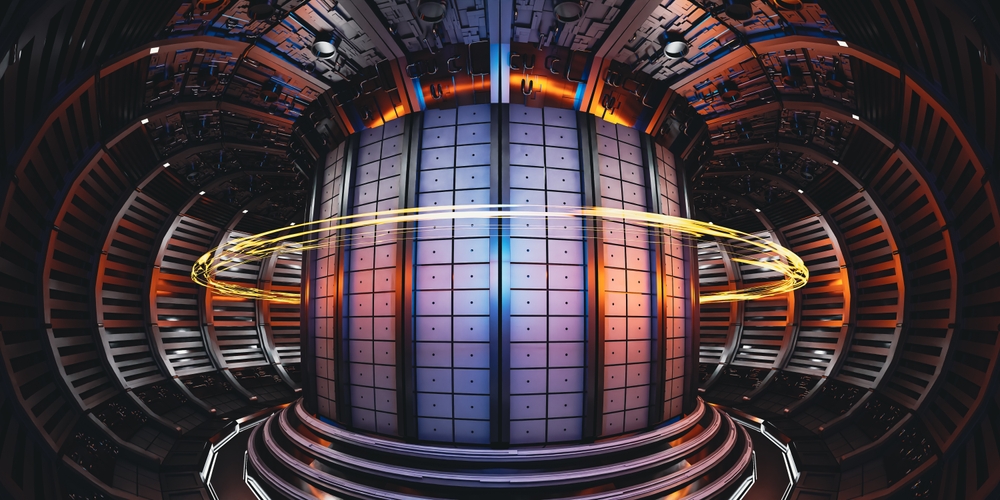
Members of the European Parliament from the European People’s Party are urging the EU to move faster on nuclear fusion, arguing the technology is no longer a distant scientific experiment but a realistic future energy source. In a declaration released Tuesday, lawmakers called on the European Commission to establish a clear and predictable regulatory framework that would give investors the confidence to back fusion projects, which are expected to require enormous funding.
The appeal comes as the Commission prepares to unveil a dedicated fusion energy strategy. While no timeline has been confirmed, MEPs say political clarity is urgently needed as private investment and industrial capabilities begin to align. “Fusion has reached a turning point,” the declaration states, stressing that Europe must now provide strong political backing to keep development on track.
From Research Labs to Industrial Power
Several lawmakers argued that fusion should no longer be viewed purely as research. Bulgarian MEP Tsvetelina Penkova said the EU needs to move past the idea that fusion belongs only in laboratories. German MEP Hildegard Bentele described it as Europe’s opportunity to turn scientific leadership into real industrial strength, while Belgium’s Pascal Arimont called fusion a strategic chance to secure clean, safe and reliable energy while boosting competitiveness.
The declaration asks the Commission to clarify how fusion should be regulated, distinctly separating it from nuclear fission. Lawmakers also want member states to retain flexibility over licensing, safety rules and permitting, while still following EU standards on radiation protection, waste management, decommissioning and liability.
Why Fusion Matters Now
Fusion energy works by fusing small atomic nuclei—like hydrogen—together, releasing vast amounts of energy, the same process that powers the sun. Unlike nuclear fission, which splits large atoms and produces long-lasting radioactive waste, fusion is considered cleaner and safer, though it has yet to be commercially deployed.
Momentum has been building since a major breakthrough in the United States in 2022, when scientists achieved a controlled fusion reaction that produced more energy than it consumed. In Europe, Germany has taken the lead, striking a €7 billion deal with energy company RWE in 2023 to build a pilot fusion plant by 2035. Chancellor Friedrich Merz has pledged to push for a supportive regulatory framework across Germany and the EU, arguing that fusion could play a key role in Europe’s future energy security.

