

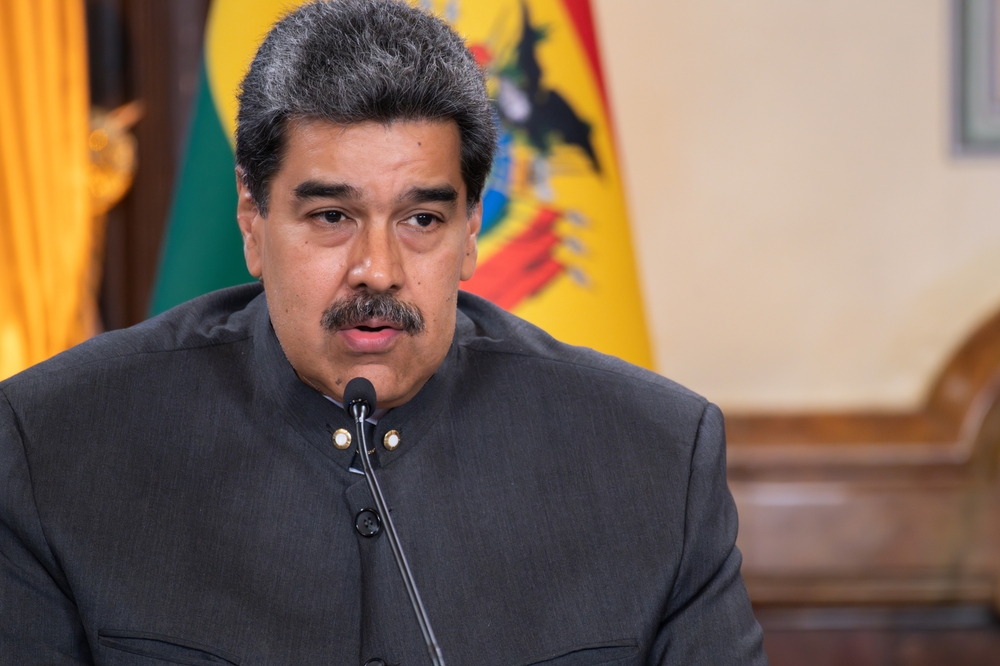
In a move that stunned governments and analysts around the world, US forces arrested Venezuelan President Nicolás Maduro and his wife, Cilia Flores, in Caracas and transported them to New York to face criminal charges. Soon after, President Donald Trump announced that the United States would assume temporary control of Venezuela, describing the step as necessary to ensure stability and protect the Venezuelan people.
Speaking from his Mar-a-Lago resort on Saturday, Trump said Washington would oversee the country until a “safe, proper and judicious transition” could be arranged. He offered few concrete details but said senior US officials would help manage the process.
Trump outlines interim control of Venezuela
“We are going to run the country until such time as we can do a safe transition,” Trump said, adding that the US could not risk Venezuela falling into the hands of leaders who might not act in the public’s interest.
Standing behind him were Secretary of State Marco Rubio, Defense Secretary Pete Hegseth, and Chairman of the Joint Chiefs of Staff General Dan Caine, all of whom Trump suggested would play roles in overseeing the interim period. Trump also claimed that Venezuela’s vice president, Delcy Rodríguez, had been sworn in and was willing to cooperate with US plans, though no such announcement was made by the Venezuelan government.
Trump framed the operation as part of a broader strategy, saying the US was prepared to deploy forces on the ground if necessary. He also spoke openly about economic interests, particularly Venezuela’s oil sector, suggesting US energy companies would invest billions to repair infrastructure and restart production.
“We are ready to stage a second and much larger attack, if we need to do so,” he said.
Legal justification and backlash in Washington
At the same press conference, Secretary of State Marco Rubio defended the operation as a law enforcement action supported by the military, arguing that congressional approval was not required. He pointed to Maduro’s 2020 indictment in the United States and said the Venezuelan leader was a fugitive facing a $50 million reward.
“This was not the kind of mission you can do congressional notification on,” Rubio said, adding that Maduro was not the legitimate president of Venezuela.
Trump echoed that reasoning, suggesting advance notice to Congress could have led to leaks that jeopardized the operation.
Democrats in Washington reacted sharply. Senator Mark Warner, vice chairman of the Senate Select Committee on Intelligence, warned that the arrest set a dangerous global precedent.
“If the United States claims the right to invade another country to seize its leader, what stops China from doing the same in Taiwan or Russia from abducting Ukraine’s president?” Warner said. He argued that crossing this line could accelerate global instability and empower authoritarian regimes.
Warner also accused the administration of hypocrisy, pointing to Trump’s pardon of former Honduran President Juan Orlando Hernández, who was convicted in the US on drug trafficking charges.
Support, uncertainty, and risks ahead
Republicans largely rallied behind Trump. Senator Roger Wicker, chairman of the Senate Armed Services Committee, praised the operation as the result of a long campaign to weaken criminal networks linked to Maduro’s government. He said the Venezuelan people now had a chance to move toward peace and prosperity.
Still, experts cautioned that the consequences could be severe. Daniel DePetris, a fellow at Defense Priorities, warned that Venezuela could face military fragmentation, expanded criminal activity, or even civil war.
“An even worse autocrat could emerge,” DePetris said, adding that none of these scenarios would serve regional stability or US interests.
He also questioned the administration’s shifting justifications for action against Maduro, which have ranged from fighting drug trafficking and reclaiming oil resources to promoting democracy. While US officials have described Venezuela as a major security threat, DePetris argued the country is more accurately a weakened state whose economy has collapsed over the past decade.
Whether the US intervention leads to recovery or deeper chaos, observers agree that Venezuela has entered one of the most uncertain and consequential periods in its modern history.

