
Close Menu
    Facebook X (Twitter) Instagram
    Facebook X (Twitter) Instagram
    Beijing Mirror
    Subscribe
    • Business & Economy
    • Education
    • Entertainment
    • Health
    • Media
    • News
    • Opinion
    • Sports
    • Real Estate
    • More
      • Culture & Society
      • Travel & Tourism
      • Politics & Government
      • Environment & Sustainability
      • Technology & Innovation
    Beijing Mirror
    Home»Education»In China, the master’s degree is the new bachelor’s degree
    Education

    In China, the master’s degree is the new bachelor’s degree

    Andrew RogersBy Andrew RogersSeptember 16, 2025No Comments4 Mins Read
    Share Facebook Twitter Pinterest LinkedIn Tumblr Email
    Follow Us
    Google News Flipboard Threads
    Share
    Facebook Twitter LinkedIn Pinterest Email

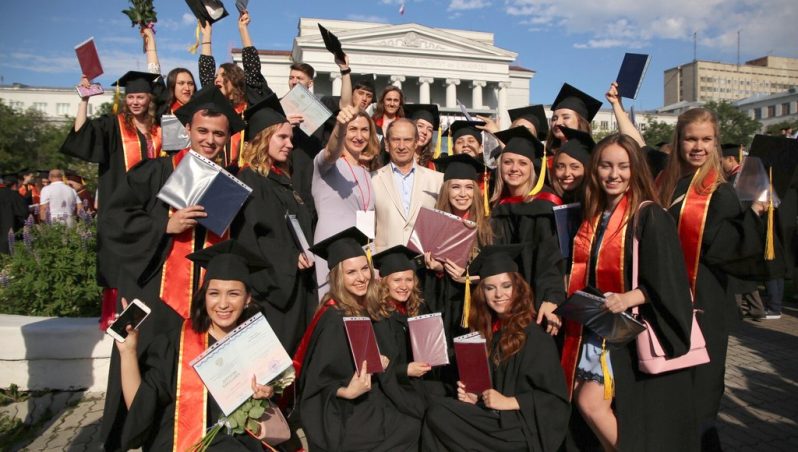
    In China, earning a master’s degree has become the new baseline for career advancement, replacing the bachelor’s degree as the standard qualification for many professions. This shift reflects rising educational expectations, intense competition, and a rapidly evolving job market.

    Graduates entering the workforce increasingly find that a bachelor’s degree alone is no longer sufficient to secure desirable positions. Employers are raising standards, often requiring advanced degrees even for entry-level roles. As a result, students are investing additional years in graduate education to remain competitive.

    “The bachelor’s degree used to open doors,” said an education expert. “Now, a master’s is often necessary just to get through the front door of many industries, from finance and technology to government and education.”

    This trend has been fueled by several factors. China’s economy has expanded rapidly, creating a highly competitive labor market where more candidates hold higher education credentials. At the same time, automation and technological advancement have raised the skill level required for many positions.

    Universities across China are responding by offering more graduate programs, specialized training, and professional master’s degrees. Fields such as data science, artificial intelligence, finance, and international business are particularly popular among students seeking to gain an edge.

    The pressure to pursue a master’s degree has significant social and economic implications. Students face increased tuition costs, longer periods of study, and mounting stress. Families often invest heavily in education, viewing graduate degrees as essential for future financial stability.

    Employers report that graduates with master’s degrees bring more advanced analytical skills, specialized knowledge, and workplace readiness. However, some critics argue that the emphasis on higher degrees can contribute to credential inflation, making it harder for individuals without advanced education to compete fairly.

    The shift also reflects broader societal trends in China, where educational achievement is closely linked to social mobility. Students and parents perceive advanced degrees as a pathway to higher salaries, better job security, and improved social status.

    Government policies have further encouraged this trend. Initiatives to expand higher education, promote innovation, and cultivate talent in key industries have increased opportunities for graduate study. Scholarships and funding programs make it more feasible for students to pursue master’s degrees despite rising costs.

    While master’s degrees are increasingly common, experts caution that the quality of education varies widely. Some programs emphasize practical skills and industry connections, while others focus on research and theoretical knowledge. Choosing the right program has become critical for career outcomes.

    The trend has led to an intense competition among students. Admission to top universities for master’s programs is highly competitive, requiring high academic performance, strong recommendations, and, in some cases, work experience. The pressure to excel can be both motivating and stressful.

    International comparisons show that China is not alone in this trend. Other countries are also experiencing rising educational expectations, though the pace and intensity of master’s degree proliferation in China are notable. Analysts say this reflects both economic growth and the government’s strategic emphasis on a highly skilled workforce.

    Despite the challenges, students continue to pursue master’s degrees in large numbers. The perception that advanced education is essential for long-term success drives enrollment, creating a cycle in which bachelor’s degrees alone are increasingly insufficient.

    As China’s labor market continues to evolve, the master’s degree is solidifying its place as the new baseline for career readiness. Students, employers, and educational institutions are adapting to this reality, redefining expectations for what constitutes a competitive qualification in the modern workforce.

    The shift underscores the value placed on education in China and highlights the broader global trend of credential inflation, where advanced degrees are increasingly necessary to access opportunities once available to those with undergraduate degrees.

    Share. Facebook Twitter Pinterest LinkedIn Tumblr Email
    Andrew Rogers
    • Website
    • Facebook

    Andrew Rogers is a freelance journalist based in Beijing, China, with over 15 years of experience covering Politics, World Affairs, Business, Health, Technology, Finance, Lifestyle, and Culture. He earned his degree in Communication and Journalism from the University of Florida. Over the course of his career, he has contributed to major outlets such as The Miami Herald, CNN, and USA Today. Known for his clear and engaging reporting, Andrew delivers accurate and timely news that keeps readers informed on both national and international developments.

    Related Posts

    Clues from a Vanished World

    November 23, 2025

    AI Education Innovations Shine at CIFTIS

    October 11, 2025

    Beijing to Introduce AI Courses Across Primary and Secondary Schools

    September 16, 2025
    Leave A Reply Cancel Reply

    Latest News

    China Premier Boosts Australia Trade Ties

    Grace JohnsonApril 9, 2026

    China’s premier has emphasized the importance of expanding trade and cooperation with Australia to support…

    Sun Yingsha Wins Third World Cup

    Andrew RogersApril 6, 2026

    In an exciting finale at the 2026 ITTF World Cup in Macao, Sun Yingsha defeated…

    China Unveils Eco Law and Green Tech

    Andrew RogersApril 2, 2026

    China has passed its first Ecological and Environmental Code, creating a unified legal framework for…

    China Hosts High-Level Political Forum

    Grace JohnsonMarch 30, 2026

    China successfully hosted a high-level political and economic forum in Beijing this week, bringing together…

    Top Trending

    Meta faces investigation over AI chats with children

    Grace JohnsonAugust 18, 2025

    A US senator has launched a probe into Meta. A leaked internal document reportedly showed…

    AI Assistant for Astronaut Health

    Rachel MaddowAugust 18, 2025

    Google and NASA collaborate on an AI system called the “Crew Medical Officer Digital Assistant”…

    Swatch Withdraws Controversial Ad After Accusations of Racism in China

    Lester HoltAugust 18, 2025

    Apology Issued Following Outcry Swiss watchmaker Swatch has removed an advertisement after widespread criticism in…

    Researchers unlock microbial secret behind fine chocolate

    Andrew RogersAugust 18, 2025

    Chocolate can take on many flavors – from fruity and floral to strong and bitter.…

    Beijing Mirror delivers powerful stories, breaking news, sports, and culture—bringing bold perspectives and timely updates to keep readers informed, inspired, and connected worldwide.

    We’re social. Connect with us:

    © 2026 Beijing Mirror. All Rights Reserved.
    Facebook X (Twitter) YouTube

    CATEGORIES

    • Business & Economy
    • Culture & Society
    • Education
    • Entertainment
    • Environment & Sustainability
    • Health
    • Media
    • News
    • Opinion
    • Politics & Government
    • Real Estate
    • Sports
    • Technology & Innovation
    • Travel & Tourism
    • Business & Economy
    • Culture & Society
    • Education
    • Entertainment
    • Environment & Sustainability
    • Health
    • Media
    • News
    • Opinion
    • Politics & Government
    • Real Estate
    • Sports
    • Technology & Innovation
    • Travel & Tourism

    IMPORTANT LINKS

    • Contact Us
    • Privacy Policy
    • Terms and Conditions
    • Disclaimer
    • Imprint
    • Contact Us
    • Privacy Policy
    • Terms and Conditions
    • Disclaimer
    • Imprint

    Type above and press Enter to search. Press Esc to cancel.