

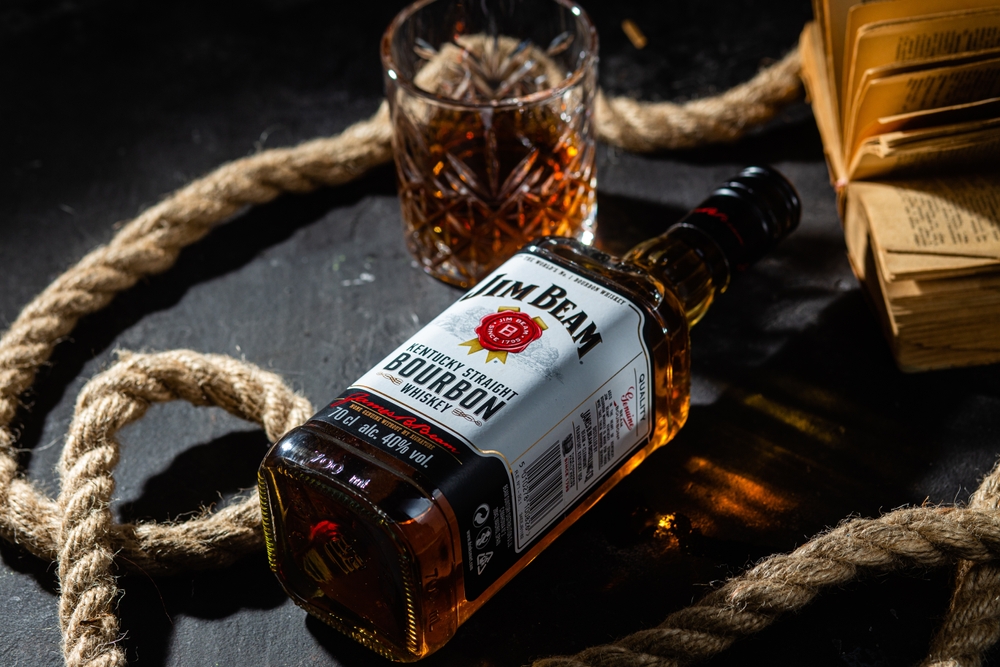
Jim Beam will halt production at its main Kentucky distillery for the whole of next year. The company confirmed the shutdown will extend through 2026. Executives said the move followed a close review of demand and output levels.
Management said it routinely adjusts production to match consumer demand. Leaders recently met employees to discuss expected volumes for 2026. That internal assessment led to the production pause.
Shutdown period earmarked for site improvements
The distillery will remain closed while the company carries out major site upgrades. Executives said the pause allows focused work without disrupting operations. Management described the decision as a strategic investment.
Leaders stressed the move does not indicate a retreat from bourbon production. The company said it continues to plan for long-term growth. Executives framed the pause as disciplined capacity management.
Trade tensions deepen uncertainty for Kentucky distillers
Bourbon producers across Kentucky face an increasingly uncertain outlook. Global trade disputes have complicated planning across the industry. US President Donald Trump’s trade policies have added further strain.
Producers have re-evaluated export markets and expansion plans. Tariff shifts have altered demand forecasts. The sector now operates under greater volatility.
Most Jim Beam facilities remain open
Jim Beam operates under Japanese drinks group Suntory Global Spirits. The company employs more than 1,000 people across Kentucky. Management said most operations will continue next year.
A separate distillery will stay active during the shutdown. Bottling and warehousing facilities will also keep running. The Kentucky visitor centre will remain open.
Company weighs staffing options with union
Jim Beam said it is assessing how to deploy staff during the production pause. Management has opened talks with the workers’ union. Executives said they aim to manage the situation responsibly.
No final staffing decisions have been announced. Discussions will continue as planning advances. Leaders did not specify potential job impacts.
Record bourbon stockpiles raise costs
In October, the Kentucky Distillers’ Association reported record bourbon inventories statewide. Warehouses across the state held more than 16 million barrels. The figure marked the highest level on record.
The association said state taxes on stored barrels created heavy costs. Distillers paid about $75m, or £56m, this year. Industry leaders described the burden as crushing.
Tariffs and boycotts hit overseas sales
US distillers have faced retaliatory import taxes in foreign markets. These followed tariff measures announced in April. Trading partners responded with countermeasures.
Industry leaders said recent expansion focused on global growth. They called for a return to reciprocal, tariff-free trade. Canadian provincial boycotts of US spirits earlier this year also cut sales.

