
Close Menu
    Facebook X (Twitter) Instagram
    Facebook X (Twitter) Instagram
    Beijing Mirror
    Subscribe
    • Business & Economy
    • Education
    • Entertainment
    • Health
    • Media
    • News
    • Opinion
    • Sports
    • Real Estate
    • More
      • Culture & Society
      • Travel & Tourism
      • Politics & Government
      • Environment & Sustainability
      • Technology & Innovation
    Beijing Mirror
    Home»News»A Historic Idea Meets Political Reality
    News

    A Historic Idea Meets Political Reality

    Rachel MaddowBy Rachel MaddowDecember 19, 2025No Comments4 Mins Read
    Share Facebook Twitter Pinterest LinkedIn Tumblr Email
    Follow Us
    Google News Flipboard Threads
    Share
    Facebook Twitter LinkedIn Pinterest Email

    EU leaders realised late Thursday that their unprecedented reparations loan for Ukraine could not survive political resistance.
    The plan aimed to transform frozen Russian central bank assets into a zero-interest loan for Kyiv.
    Leaders ultimately judged the proposal too risky and too uncertain to implement.

    The idea appeared daring, ambitious, and symbolically powerful.
    It also pushed the bloc into uncharted legal and financial territory.
    In the end, that leap proved too large for consensus.

    EU leaders chose a familiar solution instead.
    They agreed to support Ukraine through joint borrowing on financial markets.
    They avoided touching the €210 billion in immobilised Russian assets.

    Belgian Prime Minister Bart De Wever led opposition to the plan.
    He warned leaders that seizing Russian-linked funds exposed the EU to unpredictable consequences.
    He argued that governments prefer certainty when risks grow severe.

    The bloc will now raise €90 billion through joint debt issuance.
    Russian assets will remain frozen until Moscow ends the war and compensates Ukraine.
    This decision abandons the European Commission’s original promise to Kyiv.

    September and October: Momentum and Resistance

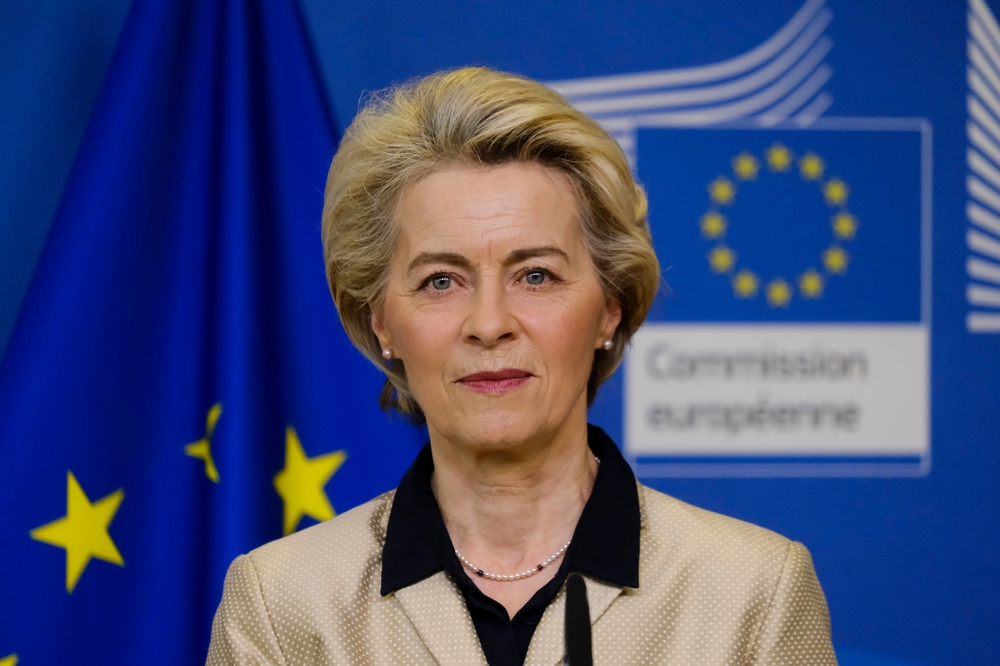
    European Commission President Ursula von der Leyen introduced the idea on 10 September.
    She raised it during her State of the EU speech in Strasbourg.
    She proposed using profits from frozen Russian assets to back a reparations loan.

    Von der Leyen offered no technical details at that stage.
    She argued Russia should pay for the war it started.
    She said European taxpayers should not shoulder the entire burden.

    German Chancellor Friedrich Merz then pushed the idea forcefully.
    He endorsed the plan in a Financial Times opinion piece.
    He presented the proposal as almost inevitable, despite its lack of precedent.

    Diplomats reacted with surprise and discomfort.
    Some accused Germany of setting the EU agenda unilaterally.
    The Commission later circulated a short, theoretical document outlining the plan.

    Belgium reacted sharply to that move.
    It holds about €185 billion of the frozen Russian assets through Euroclear.
    Belgian officials felt excluded from early consultations.

    De Wever publicly warned against spending Europe’s strongest leverage over Moscow.
    He argued that using the assets would eliminate future pressure on Russia.
    He demanded legal certainty, shared risks, and collective responsibility.

    An October summit failed to deliver agreement.
    Leaders asked the Commission to explore multiple funding options instead.
    Von der Leyen still described the loan as the preferred solution.

    November and December: From Shock to Collapse

    In November, von der Leyen presented three funding options to leaders.
    They included voluntary contributions, joint debt, and the reparations loan.
    She admitted none of the choices offered an easy path.

    Her proposal addressed Belgian concerns with extensive guarantees.
    It also warned of potential reputational damage to the eurozone.
    The loan could destabilise financial markets, the letter acknowledged.

    External events briefly strengthened the loan’s appeal.
    US and Russian officials circulated a controversial peace plan.
    That plan proposed exploiting frozen assets for shared commercial benefit.

    European leaders rejected that approach outright.
    They insisted Europe must control decisions within its jurisdiction.
    Momentum briefly returned to the reparations loan.

    De Wever then sent a sharply critical letter to von der Leyen.
    He called the proposal fundamentally flawed and dangerous.
    He warned it could undermine prospects for a future peace deal.

    In December, the Commission unveiled full legal texts.
    The European Central Bank refused to provide a liquidity backstop.
    Euroclear criticised the plan as fragile and experimental.

    Several eastern and northern states defended the proposal publicly.
    They argued it upheld Ukraine’s right to compensation.
    Commission officials echoed that message repeatedly.

    Momentum faded again when Italy, Bulgaria, and Malta raised objections.
    They urged safer and more predictable financing methods.
    Other leaders quietly echoed those concerns.

    At the 18 December summit, leaders attempted a final compromise.
    They discussed unlimited guarantees and full reimbursement commitments.
    That language alarmed exhausted negotiators.

    Leaders feared massive liabilities for Belgian banks.
    They abandoned the reparations loan and chose joint debt instead.

    De Wever said he expected the outcome.
    He argued no financial solution comes without cost.
    He concluded that free money simply does not exist.

    Share. Facebook Twitter Pinterest LinkedIn Tumblr Email
    Rachel Maddow
    • Website
    • Facebook

    Rachel Maddow is a freelance journalist based in Beijing, China, with over 20 years of experience covering Politics, World Affairs, Business, Health, Technology, Finance, Lifestyle, and Culture. She holds a degree in Communication and Journalism from Stanford University. Over the course of her career, she has contributed to leading outlets such as The New York Times, BBC, and CNN. Recognized for her insightful analysis and engaging reporting style, Rachel delivers accurate and timely news that keeps readers informed on key national and international developments.

    Related Posts

    Tragedy Strikes Northern B.C. Community as School Shooting Claims Lives

    February 11, 2026

    Maxwell Refuses to Testify, Ties Clemency to Epstein Probe

    February 10, 2026

    EV Slowdown Forces ACC to Pull Plug on Major Battery Projects

    February 7, 2026
    Leave A Reply Cancel Reply

    Latest News

    US Clean Energy Growth Hits Record High Update Now

    Lester HoltApril 19, 2026

    US Clean Energy Growth is rising fast in the United States. New data shows strong…

    AI medical diagnosis tools save lives in clinics

    Andrew RogersApril 15, 2026

    AI medical diagnosis tools are becoming an important part of healthcare in China, where community…

    Chinese Short Drama Expansion Hits Global Market

    Andrew RogersApril 12, 2026

    Chinese short drama creators are expanding rapidly into international markets, including the United States, as…

    China Premier Boosts Australia Trade Ties

    Grace JohnsonApril 9, 2026

    China’s premier has emphasized the importance of expanding trade and cooperation with Australia to support…

    Top Trending

    Meta faces investigation over AI chats with children

    Grace JohnsonAugust 18, 2025

    A US senator has launched a probe into Meta. A leaked internal document reportedly showed…

    AI Assistant for Astronaut Health

    Rachel MaddowAugust 18, 2025

    Google and NASA collaborate on an AI system called the “Crew Medical Officer Digital Assistant”…

    Swatch Withdraws Controversial Ad After Accusations of Racism in China

    Lester HoltAugust 18, 2025

    Apology Issued Following Outcry Swiss watchmaker Swatch has removed an advertisement after widespread criticism in…

    Researchers unlock microbial secret behind fine chocolate

    Andrew RogersAugust 18, 2025

    Chocolate can take on many flavors – from fruity and floral to strong and bitter.…

    Beijing Mirror delivers powerful stories, breaking news, sports, and culture—bringing bold perspectives and timely updates to keep readers informed, inspired, and connected worldwide.

    We’re social. Connect with us:

    © 2026 Beijing Mirror. All Rights Reserved.
    Facebook X (Twitter) YouTube

    CATEGORIES

    • Business & Economy
    • Culture & Society
    • Education
    • Entertainment
    • Environment & Sustainability
    • Health
    • Media
    • News
    • Opinion
    • Politics & Government
    • Real Estate
    • Sports
    • Technology & Innovation
    • Travel & Tourism
    • Business & Economy
    • Culture & Society
    • Education
    • Entertainment
    • Environment & Sustainability
    • Health
    • Media
    • News
    • Opinion
    • Politics & Government
    • Real Estate
    • Sports
    • Technology & Innovation
    • Travel & Tourism

    IMPORTANT LINKS

    • Contact Us
    • Privacy Policy
    • Terms and Conditions
    • Disclaimer
    • Imprint
    • Contact Us
    • Privacy Policy
    • Terms and Conditions
    • Disclaimer
    • Imprint

    Type above and press Enter to search. Press Esc to cancel.